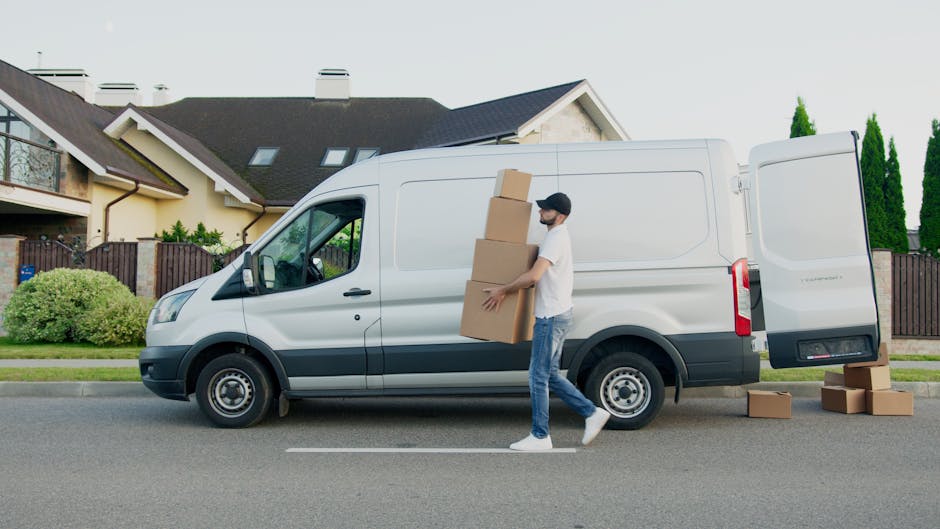
Optimising Van Load Plans: Techniques Pro Movers Use
When a move runs smoothly, it can look almost effortless from the outside. Boxes come out in the right order, furniture fits without a scramble, and nobody is standing in the driveway wondering where the sofa is supposed to go. That calm finish usually starts with optimising van load plans: techniques pro movers use well before the first item leaves the property. Truth be told, a good load plan is part logistics, part experience, and part common sense.
If you have ever watched a van fill up and thought, surely there is a better way to do this, you are not wrong. There is. Professional movers do not just "pack the van"; they build a system that protects belongings, saves time, reduces fuel waste, and makes unloading far less stressful. In this guide, we will break down the thinking behind a smart van load plan, show you the practical methods professionals use, and explain how to avoid the usual mistakes that turn a decent move into a chaotic one.
This article is useful whether you are organising a house move, managing a business relocation, or simply trying to understand why one crew seems to do everything faster and with fewer headaches than another. Let's get into it.
Table of Contents
- Why optimising van load plans matters
- How the process works in practice
- Key benefits and practical advantages
- Who this is for and when it makes sense
- Step-by-step guidance
- Expert tips for better results
- Common mistakes to avoid
- Tools, resources and recommendations
- Law, compliance, standards and best practice
- Options, methods and comparison table
- Case study or real-world example
- Practical checklist
- Conclusion
- Frequently asked questions
Why Optimising Van Load Plans: Techniques Pro Movers Use Matters
A van load plan is the order and layout used to place items inside the vehicle so the load is stable, accessible, and efficient. That sounds simple, but in real life it affects nearly every part of the move. Poor loading can create damage, delays, awkward unloading, and even safety problems. Good loading, on the other hand, makes the day feel controlled. And on moving day, controlled is a lovely word.
Professional movers understand that every item has a job to do in the van. Heavy items often form the base, long items may act like structure, and fragile items need a protected pocket where nothing can press on them. A load plan is basically a three-dimensional puzzle, except the stakes are higher and nobody wants a scratched wardrobe or a broken lamp at the other end.
The reason this matters so much is that a van is not just a container. It is a moving environment. Corners, wheel arches, door gaps, and uneven weight distribution all affect how the vehicle handles on the road. If weight is thrown to one side, the van can feel awkward to drive, brake less predictably, and put unnecessary strain on the vehicle. For larger jobs, that is more than a nuisance; it becomes a safety concern.
There is also a customer-experience angle. A well-planned load means the first items needed at delivery can come out quickly. That matters if the kettle is at the back of the van or if the bed frame needs assembling before the rain starts. We have all seen that moment where everyone is peering into the van at 8:15 in the morning, hoping the mattress is not buried under six boxes of books. A good load plan avoids that scene entirely.
In commercial moves, the stakes can be even higher. Office teams often need computers, chairs, archive boxes, and desks delivered in a very specific sequence so the business can get back to work. A disorderly load plan can cost far more than a little time. It can disrupt operations, create pressure on staff, and make the whole move feel messy from start to finish.
How Optimising Van Load Plans: Techniques Pro Movers Use Works
At its core, optimisation means getting the best result from the space, time, and equipment available. Pro movers usually start by grouping items by size, weight, fragility, and delivery priority. Then they build the load from the van floor upwards and from the far end towards the doors, or sometimes in sections depending on unloading order. There is no single trick that works every time. The best crews adjust to the property, the route, the item mix, and the van size.
The process normally begins before loading starts. Experienced movers will assess the furniture list, spot the awkward pieces, and identify anything that needs special handling. A slim bookcase, for example, may fit best alongside the side wall. A washing machine may need to go in early because it provides a strong, stable base. Delicate mirrors, if packed correctly, can sit in a protected vertical position where they are less likely to flex.
Then comes the spacing question. Professional loaders do not always aim to cram the van to the ceiling as quickly as possible. That would be tempting, and yes, a little dramatic. Instead, they leave only the space needed for padding, straps, and safe movement. A van packed too tightly can cause pressure damage or make unloading awkward. A van packed too loosely can allow shifting during transit. The sweet spot is snug, but not crushed.
Load planning also depends on sequence. If a delivery has multiple stops, the first stop must be accessible without dismantling half the van. This is where the best movers really stand out. They plan the van almost like a stage set: the right piece has to appear at the right moment. No drama, no digging, no swearing under the breath, or at least less of it.
Weight distribution is another major factor. The load should sit low and balanced across the axle area where possible. Heavy items are usually placed near the front section of the load space and centred as much as the item shapes allow. This helps keep the vehicle stable in motion. Light but bulky items such as cushions, duvets, or soft bags can then fill gaps higher up, acting almost like protective filler.
Professional movers also use restraint systems. Straps, blankets, floor protection, and load bars help stop items from moving when the van turns or brakes. In a real move, roads are never perfectly smooth, and even a short trip over speed bumps can shift an unsecured load. That rattling sound? Nobody wants that.
Key Benefits and Practical Advantages
A well-optimised load plan does more than make the van look neat. It improves the entire move in ways that are easy to feel on the day and easy to appreciate after. The benefits stack up quickly.
- Less damage: Proper stacking and secure packing reduce knocks, crush damage, and scuffed surfaces.
- Faster loading and unloading: When there is a clear order, the crew wastes less time reshuffling items.
- Better space use: Vans are limited, and good planning helps avoid unnecessary second trips.
- Safer handling: Balanced loads are easier to manage and less likely to shift during transit.
- Cleaner customer experience: The move feels organised, calm, and professionally managed.
- Lower stress for everyone: It is much easier to stay composed when the van layout makes sense.
There is also a financial side. Fewer trips can mean lower fuel use and less time on site. For businesses, that matters because labour time, vehicle usage, and scheduling all sit behind the scenes of a successful move. For household customers, it often translates into a smoother day and less disruption at the new property.
One of the less obvious advantages is communication. When the load plan is clear, the team can work more confidently. The driver knows what is where. The loader knows what should not be buried. The customer knows what to expect. It sounds basic, but basics are where a lot of move quality comes from.
Expert summary: A smart van load plan is not just about fitting more in. It is about placing the right items in the right order so the move is safer, quicker, and less stressful from pickup to delivery.
Who This Is For and When It Makes Sense
Van load planning matters for almost anyone moving items by road, but it is especially useful in a few specific situations. If you are moving a one-bedroom flat with a mix of boxes and furniture, it helps. If you are relocating a home office, it helps. If you are a business moving equipment through narrow streets in London, it really helps.
It is particularly relevant for:
- Home movers with fragile items, furniture, and mixed box sizes
- People using a man and van service for smaller or medium-sized moves
- Families booking home moves where timing and order matter
- Businesses arranging office relocation services with desks, IT kit, and documents
- Customers who need careful handling for awkward or high-value pieces
- Anyone trying to reduce the chance of a second trip because the van was not packed well first time
It also makes sense when access is tight. London streets, terraced houses, basement flats, and shared entrances all make loading a bit more complicated than a straight driveway drop. If the van needs to be parked at an angle, or the move involves steps, lifts, or long carries, load order becomes even more important. The less time you spend digging through the van, the better.
To be fair, some people only think about load plans once they see how quickly a professional team works. That is usually the moment they realise there is a craft to it. Not flashy. Just very effective.
Step-by-Step Guidance
Below is a practical approach to planning a van load like a pro mover. You do not need to be a logistics wizard. You just need to think ahead and keep the load tidy, stable, and accessible.
1. Sort items before anything goes near the van
Group everything into broad categories: heavy furniture, fragile items, boxes, soft goods, long items, and priority items. This helps you see what needs protection and what can be used as a base. A pile of random objects on the pavement is nobody's friend.
2. Identify the first and last items needed
Ask yourself what must come out first at delivery. Beds, kettle boxes, wardrobes, or office essentials might need to be positioned near the doors or in an accessible section. In multi-drop moves, this step is non-negotiable.
3. Load the heaviest items first
Heavy and sturdy items usually form the base layer. This might include appliances, chest of drawers, solid tables, or stacked boxes of books. These items create structure, and structure is what stops the load from becoming a messy wobble.
4. Place long or awkward items strategically
Mattresses, mirrors, wardrobes, and flat-pack parts can often sit along the sides or upright against the wall of the van, depending on their shape and protection needs. The point is to use awkward items as shape-makers, not afterthoughts.
5. Fill gaps with softer items
Blankets, cushions, soft bags, and wrapped bedding are brilliant at filling voids. They stop movement and protect edges. A good mover sees every gap as an opportunity to make the load more stable.
6. Protect fragile items in dedicated spaces
Fragile items should not be wedged in casually because "it seems fine." It rarely is. Use padding, upright placement where suitable, and clear separation from heavy objects. Glass, lamps, framed artwork, and electronics need room to breathe.
7. Secure everything before closing the doors
Straps and load restraints should be used where appropriate. Give the load a careful final check. If something can shift, it probably will. That is just how vans behave. A quick shake test, done gently, can reveal whether a stack is stable.
8. Plan the unloading order too
Loading and unloading are connected. If you pack the van in a way that makes unloading awkward, you have only moved the problem down the road. Imagine arriving tired, it is raining a bit, and the one box you need is behind a mountain of garden equipment. Not ideal.
Expert Tips for Better Results
Here is where the experienced crews separate themselves from the merely careful. Small habits make a big difference.
- Use the van like a grid, not a bin. Think in sections, corners, and layers. It keeps the load readable.
- Keep frequently needed items visible. Essentials should never be buried under the heaviest furniture.
- Protect edges early. Corners chip easily, especially on painted furniture and tabletops.
- Label boxes clearly. If the labels are visible, the right boxes can be placed in the right order.
- Pack similarly sized boxes together. Stacking becomes much more stable when the shapes match.
- Use blankets as buffers, not just covers. A blanket between two hard surfaces can prevent a nasty knock.
- Leave a little breathing room for unloading. Completely jammed loads often create the most frustration later.
Another tip that helps more than people expect: take five seconds to pause before the first item goes in. Seriously. Those five seconds can save ten minutes of rearranging later. It is one of the simplest professional habits, and one of the most useful.
If you are moving in an area with tight parking or narrow access, such as central London or busy residential streets, think about the route between the property and the van as well. A great load plan on paper can still fail if the team has to carry items a long way or work around awkward stairwells. Real-world loading is never only about the van itself.
And yes, sometimes one item refuses to fit where you wanted it. That happens. The trick is to stay flexible without losing the structure of the plan. A good mover adapts without turning the van into a pile of improvisation.
Common Mistakes to Avoid
Even fairly experienced movers can get caught out by a few classic loading errors. Most of them are avoidable once you know what to look for.
- Putting light items on the bottom: They get crushed, and the load becomes unstable.
- Ignoring item order: If the first-needed items are packed last, unloading becomes clumsy.
- Leaving empty gaps: Gaps let items move. Movement causes damage.
- Overloading one side: Uneven weight makes the van harder to drive and can shift the load.
- Failing to strap items down: A tidy stack can still move during braking or cornering.
- Forgetting access constraints: A box may fit in the van but become impossible to remove cleanly.
- Trying to save time by skipping protection: That often creates more work later.
One of the biggest mistakes is assuming "it will be fine for a short drive." Short drives still include stop-start traffic, corners, potholes, and traffic lights. The city does not care that you are in a hurry. The van will still move, and the load will still respond.
Another common problem is overfilling. If the van is packed so tightly that items are pressing hard against each other, pressure damage can happen. The goal is secure, not squeezed. There is a difference, and it matters.
Tools, Resources and Recommendations
You do not need expensive equipment to improve your loading, but a few practical tools make a real difference. Professional crews often rely on the same basic kit again and again because it simply works.
| Tool or resource | What it helps with | Why it matters |
|---|---|---|
| Removal blankets | Protecting furniture surfaces | Reduces scratches, knocks, and friction damage |
| Ratchet straps or load restraints | Securing larger items | Stops movement during travel |
| Floor protection | Keeping the van clean and safe | Helps reduce slips and damage from dirt or moisture |
| Labels and marker pens | Sorting boxes by room or priority | Makes unloading much easier |
| Dollies and sack trucks | Moving heavy items efficiently | Reduces strain and speeds up loading |
| Stackable boxes | Creating stable layers | Boxes of similar size are easier to organise |
As a practical recommendation, choose a van size that suits the volume of goods rather than hoping a smaller vehicle will magically work. It is tempting to underbook, especially if you are trying to keep costs down, but a tight squeeze often creates more labour and more stress. If you are comparing vehicle options, a moving van or a larger moving truck may be more suitable depending on the load.
It also helps to think beyond the van itself. Services such as packing and unpacking services can make load planning easier because boxes are more uniform and easier to stack. Likewise, choosing the right removal services can reduce the burden if you are not keen on managing every detail yourself. Fair enough, not everyone wants to spend a Saturday building a Tetris tower in the back of a van.
Law, Compliance, Standards, or Best Practice
For moving work, compliance is mostly about safety, vehicle suitability, and sensible handling rather than anything overly dramatic. The exact legal duties can vary depending on the job, the vehicle, and whether the move is domestic or commercial. It is best to treat this area carefully and follow current UK requirements where relevant.
In practice, professional movers should think about:
- Load security: Items must be secured so they do not shift dangerously while the vehicle is moving.
- Weight distribution: The load should be balanced as far as practical to support safe driving.
- Manual handling: Staff should lift and carry in a way that reduces the risk of strain or injury.
- Vehicle limits: Payload and space limits must be respected. A van full of heavy goods can become unsafe very quickly.
- Insurance and care: Items should be handled with a level of care that matches their value and fragility.
For companies operating professionally, internal policies around health and safety and insurance and safety are important because they show a clear approach to risk management. That does not guarantee perfection, of course, but it does show that the move is being handled with proper care.
Best practice also includes honest planning. If access is tight, if the staircase is narrow, or if the property layout makes loading awkward, that should be factored into the schedule and vehicle choice. A realistic plan is nearly always a safer one.
Options, Methods, or Comparison Table
There are a few ways to approach loading, depending on the size and type of move. None of them is automatically best in every case. The right method depends on the job.
| Method | Best for | Strengths | Limitations |
|---|---|---|---|
| Room-by-room loading | Home moves with mixed contents | Easy to track, simple for unloading | Can waste space if not planned well |
| Weight-first loading | Heavy furniture and appliances | Stable base, safer handling | Needs careful planning for access order |
| Priority-first loading | Multi-drop or same-day setup moves | Fast unloading at destination | Requires disciplined packing order |
| Sectioned loading | Large vans or trucks | Good control over item groups | Needs experience to manage efficiently |
For smaller domestic jobs, room-by-room loading is often easiest to understand. For heavier loads, a weight-first method usually works better because it keeps the base secure. For office or commercial moves, priority-first loading can save valuable time because essential items come out first.
If you are using a removals van or booking a man with van service, it is worth asking how the load will be structured. A good provider should be able to explain the approach in plain language. If they cannot, that is a small warning sign, to be honest.
Case Study or Real-World Example
Here is a simple real-world example. Imagine a two-bedroom flat move in South London with a sofa, dining table, bed frames, ten to fifteen boxes of books and kitchenware, a mirror, and a few soft bags. The team needs to deliver to a third-floor flat with limited parking and a tight unloading window.
A professional load plan might look like this: the heaviest items go in first and sit low against the front wall of the van. The dining table and bed frames are placed vertically along the sides with blankets between surfaces. Boxes of books are stacked tightly near the floor so they form a stable block. Fragile items like the mirror are separated and secured upright. Soft bags and bedding are used to fill remaining gaps near the top and stop movement. Essentials for the first room at the destination are placed near the doors so they can be removed quickly.
The result is not just a neat van. It is a move that feels under control. The team can unload in the right order, the client finds essentials faster, and the items are less likely to arrive scuffed or bent. That calm feeling at the end? You really do notice it.
Now compare that with a poorly planned version: boxes thrown in wherever they fit, the mattress wedged sideways, fragile items buried under a chair leg, and the kettle box somewhere near the front but not exactly easy to reach. Suddenly the unloading takes longer, people start lifting things twice, and tempers edge up a little. Same van, same items, very different day.
Practical Checklist
Use this checklist before the van doors close.
- Have the heaviest items been loaded first?
- Are fragile items protected and separated from pressure points?
- Are boxes stacked by similar size and weight?
- Have you left access to priority items for unloading?
- Are gaps filled with soft, non-crushing items?
- Are straps, blankets, or other restraints in place where needed?
- Is weight spread evenly across the van as far as possible?
- Have awkward items been positioned safely and without blocking access?
- Is the load snug but not over-compressed?
- Have you done a final visual check before setting off?
If you can tick most of these off, you are in a good place. It does not need to be perfect, but it should be deliberate. That is the real difference.
Conclusion
Optimising van load plans is one of those moving skills that looks simple until you try it properly. Then you realise it is a blend of planning, sequencing, balance, and a bit of quiet judgement. The pro mover approach is not about packing harder or faster. It is about making the load work for the move, not against it.
When you get the layout right, everything else feels easier. The van is safer to drive, the items are better protected, and the unloading starts on the right foot. That matters whether you are moving a home, shifting office equipment, or arranging a smaller local job across London.
If you are comparing options or planning a move soon, look beyond price alone. Ask how the load will be organised, how fragile items will be protected, and what happens if the van needs to be accessed in stages. A little planning now saves a lot of hassle later. Honestly, it is one of the best little investments you can make in a move.
Get a free quote today and see how much you can save.
Frequently Asked Questions
What is a van load plan in removals?
A van load plan is the order and layout used to place items inside a moving van so they are secure, balanced, and easy to unload. It helps protect belongings and speeds up the move.
Why do professional movers spend time planning the load?
Because the load plan affects safety, speed, and damage risk. A well-planned van is easier to drive, easier to unload, and far less likely to cause breakages or delays.
What should go in first when loading a van?
Usually the heaviest and sturdiest items go in first. They create a stable base for lighter boxes and help shape the rest of the load.
How do movers protect fragile items in the van?
They use blankets, careful placement, separation from heavy furniture, and secure positioning so fragile items do not get crushed or knocked during transit.
Is it better to fill every gap in the van?
Not always. Gaps should be filled where it improves stability, but the load should not be packed so tightly that pressure damage occurs. Snug is good; crushed is not.
Can a poor load plan damage furniture?
Yes. Loose items can shift, hard edges can scrape surfaces, and heavy objects can crush lighter ones. A poor load plan is one of the most common causes of avoidable damage.
How do you decide what should be unloaded first?
Think about what the client needs immediately at the destination. Essentials, beds, key office items, or fragile items that need careful handling are often placed where they are easiest to reach.
Do load plans matter for small man and van jobs?
Absolutely. Even smaller moves benefit from a smart layout because the van space is limited and the margin for error is smaller than people expect.
What is the biggest mistake people make when loading a van?
The biggest mistake is usually loading in the wrong order and leaving items unsecured. That leads to shifting, damage, and a longer unload at the other end.
Should I choose a bigger van to make loading easier?
If the load is tight, yes, a bigger van can help. But the right choice depends on the size, weight, and shape of your items. Too small usually causes stress; too big may be unnecessary.
Do I need specialist tools to optimise a van load plan?
Not always, but blankets, straps, labels, and moving equipment make a big difference. They help keep items stable and make the whole process smoother.
How can I tell if a removal company knows what it is doing?
They should be able to explain how they load heavy items, protect fragile belongings, and manage access order in plain language. Clear answers are usually a good sign.
For larger moves, office jobs, or anything with awkward access, a bit of planning goes a very long way. And if you are still unsure how much help you need, that is perfectly normal. Moves have a habit of looking simple right up until the first box is lifted.